Words by Allegra Salvadori
Closing its second edition, the Lebanese design showcase redefined how a city can rebuild — one object, one gesture, one collaboration at a time.
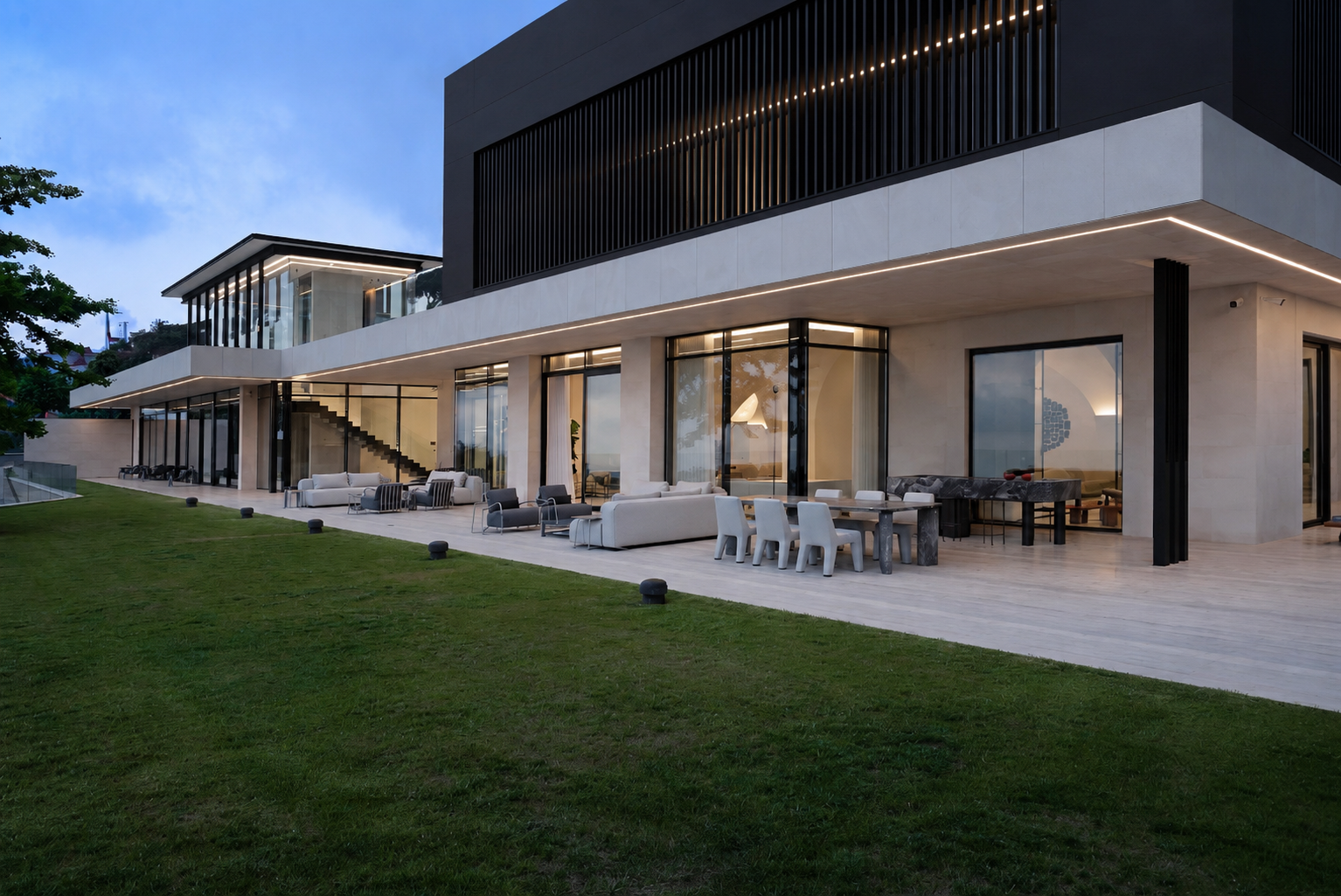
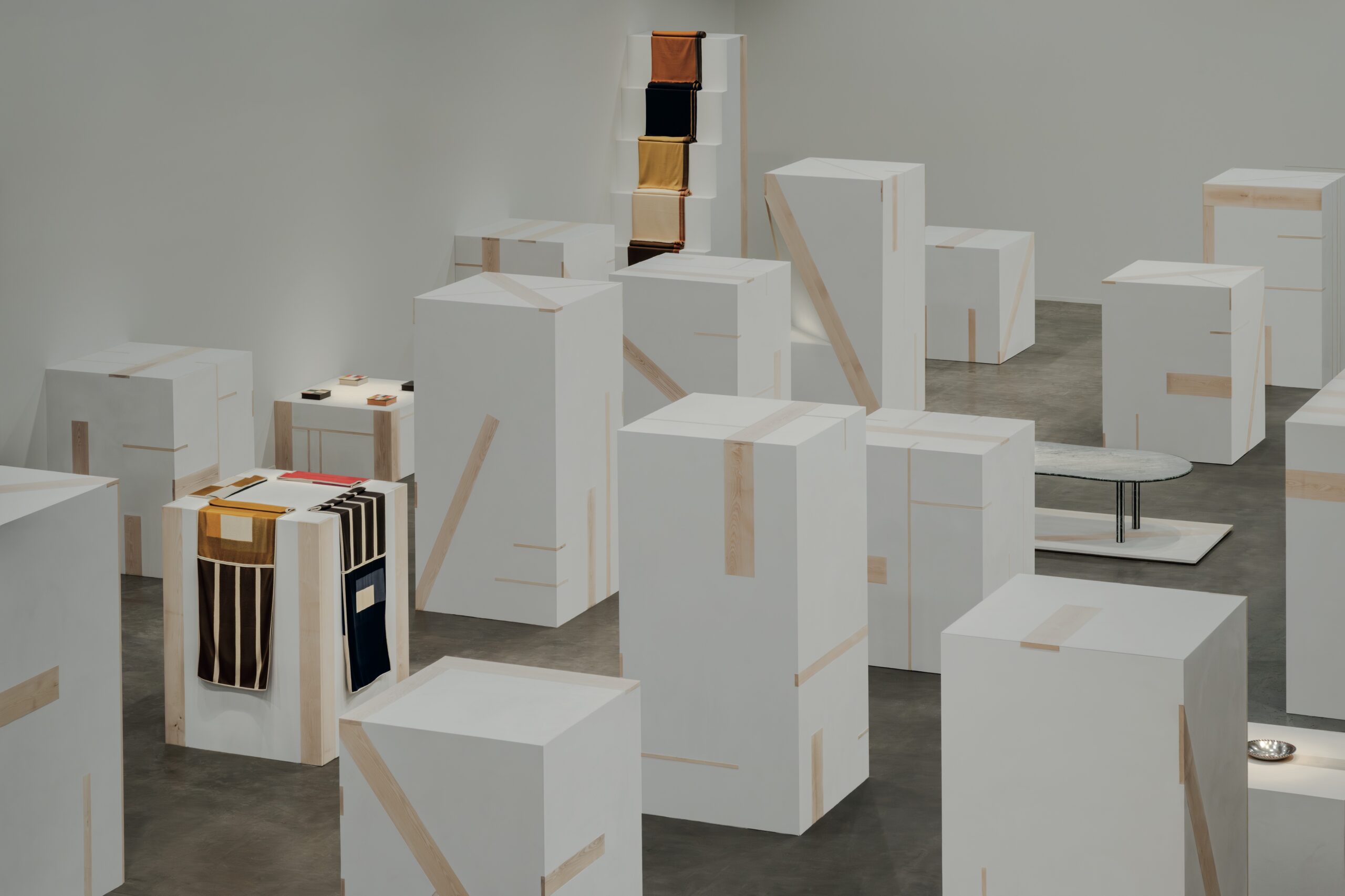
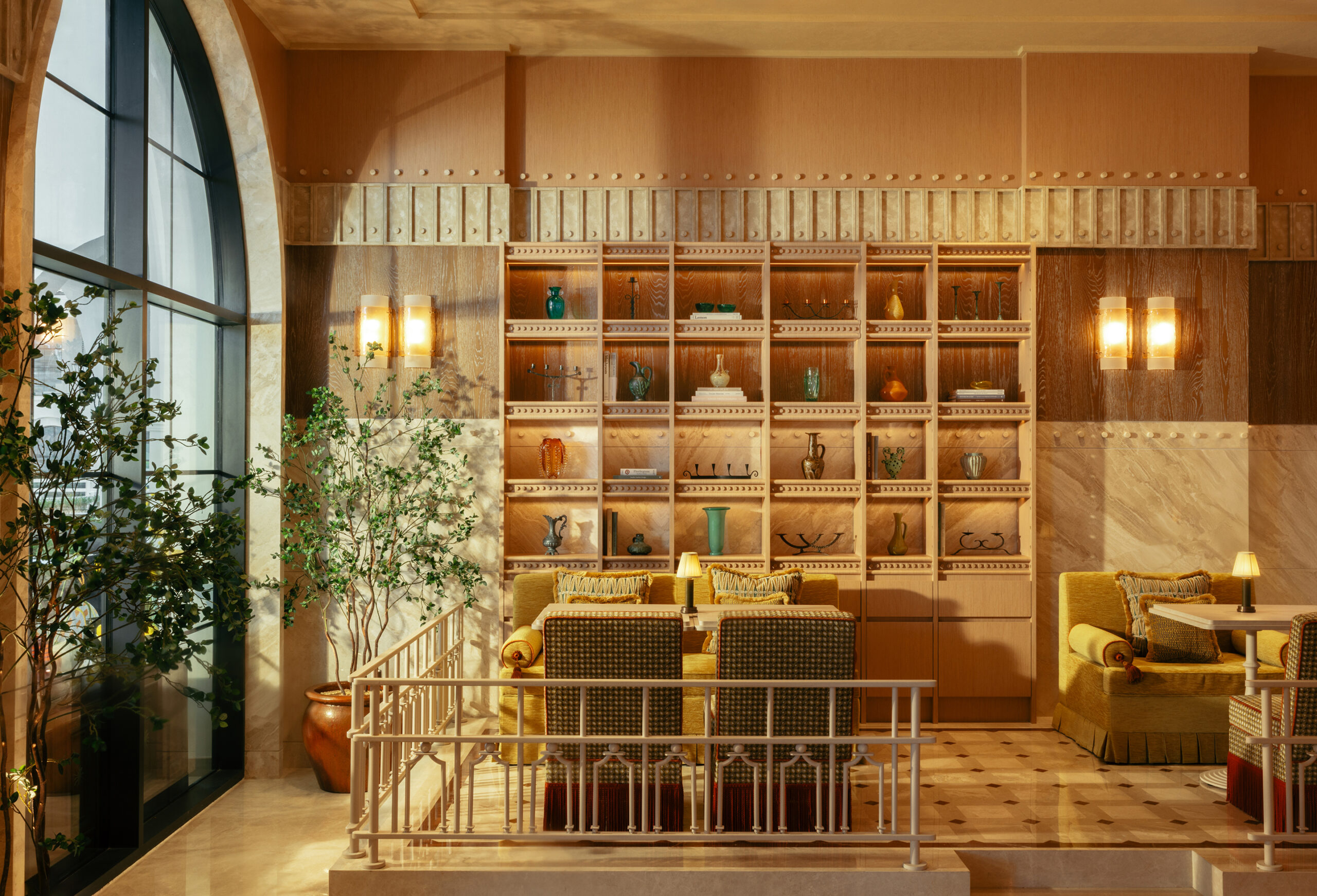
As We Design Beirut 2025 came to a close this weekend, Beirut once again proved that design can do more than adorn a city — it can rebuild it. Over five days, the Lebanese design event turned its capital into a living gallery, where heritage and experimentation converged across iconic sites: the Abroyan Factory, Villa Audi, the Roman Baths, and the Union Building.
Now in its second edition, We Design Beirut has become both a stage and a statement. “I’ve always been curious about spaces I didn’t have access to,” said founder Mariana Wehbe. “That’s how the fair began — as a way of entering those forgotten rooms and opening them to the public once again.” Together with Creative Director Samer AlAmeen, she shaped a program that moved beyond exhibition to become an act of reclamation. “Design is for everyone,” AlAmeen explained. “It’s a process, a way of thinking — not just a piece of furniture.”
Rebirth in Stone: George Geara’s Pink Phoenix
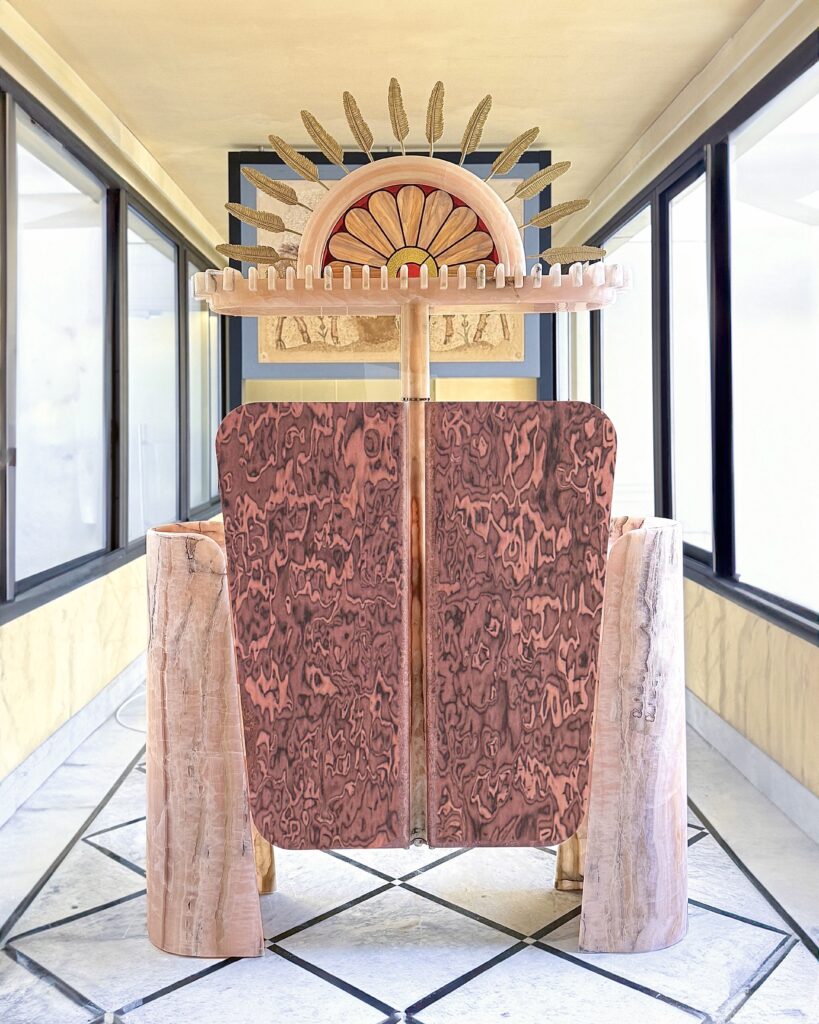
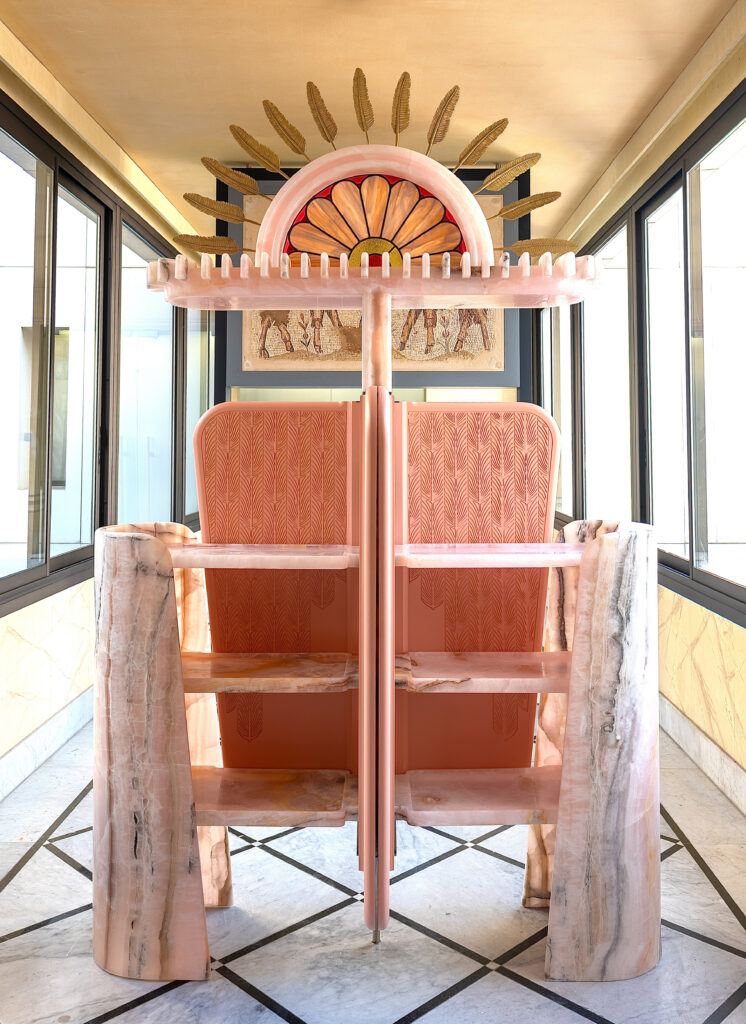
Among this year’s most striking works, The Pink Phoenix by George Geara stood as a luminous totem of endurance. Sculpted from a single block of pink onyx, the bar’s arched crown and marble sides recalled the architecture of old Beirut — its arcades, oculi, and columns — while its leather doors unfolded like wings. “The phoenix, eternal emblem of rebirth, mirrors Beirut itself,” Geara wrote. Poised between sculpture and function, the piece became a metaphor for the city’s ongoing transformation: scarred yet graceful, always capable of rising again.
In a short interview with Marie Claire Maison Arabia, Geara described The Pink Phoenix, offering a closer look at its details.
Of Water and Stone: Ritual and Continuity
At the Roman Baths, the exhibition Of Water and Stone, curated by Nour Osseiran and produced by Stones by Rania Malli, invited designers to reflect on matter, memory, and renewal. Visitors wandered through marble installations that seemed to breathe with the site itself.
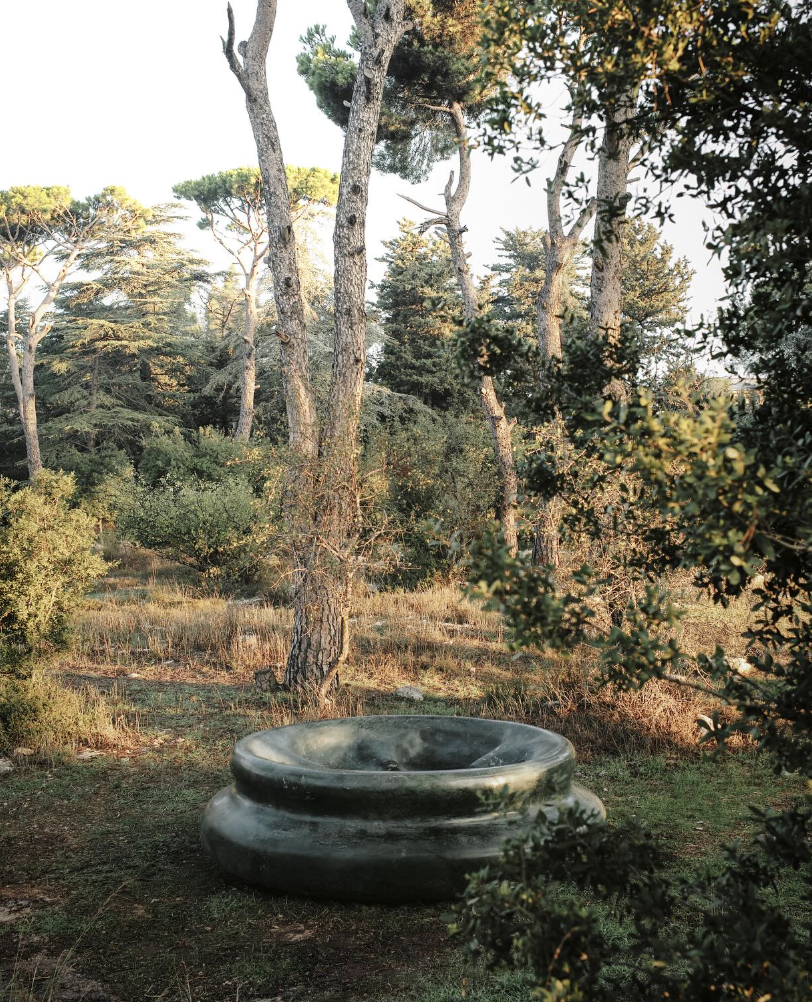
Carl Gerges’ Echoed – Thermes reinterpreted the ancient ritual of bathing through a contemporary lens. Carved from Green Guatemala marble, the circular vessel absorbed and radiated heat, merging hydrotherapy with architecture.
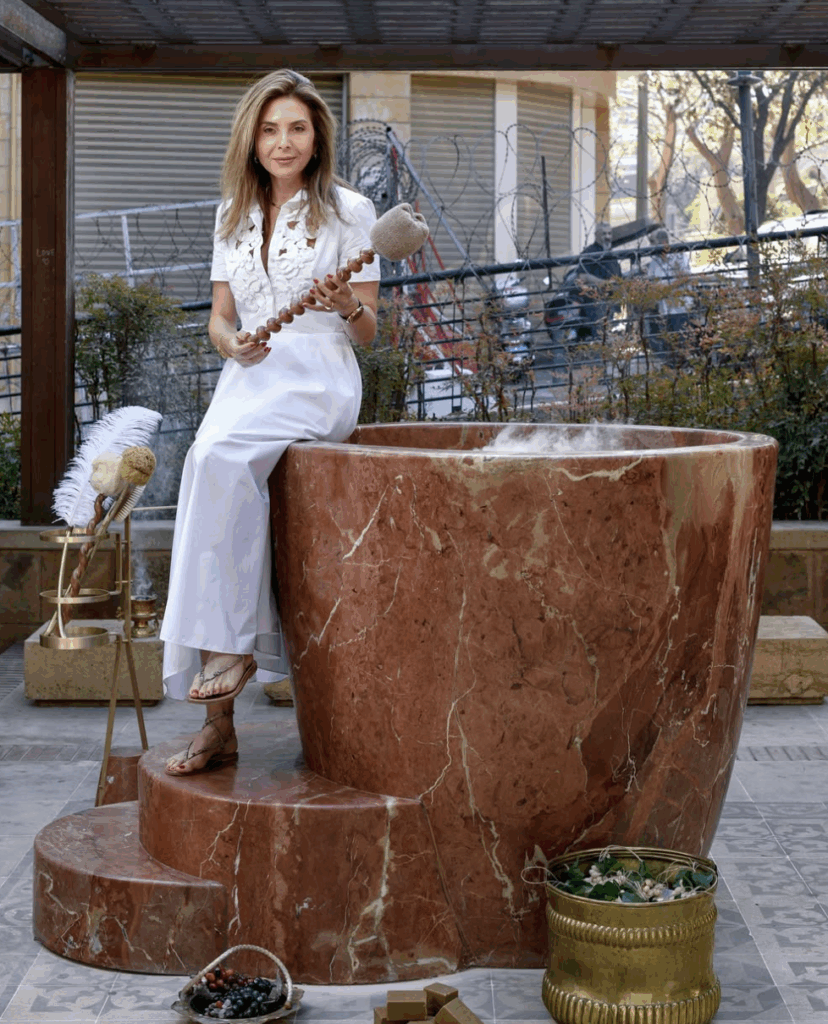
Nearby, Diana Ghandour’s Barrel in Blush offered a softer counterpart — a pink marble bathtub designed to “cleanse body and soul,” rooted in her study of color psychology and the emotional dimensions of space.
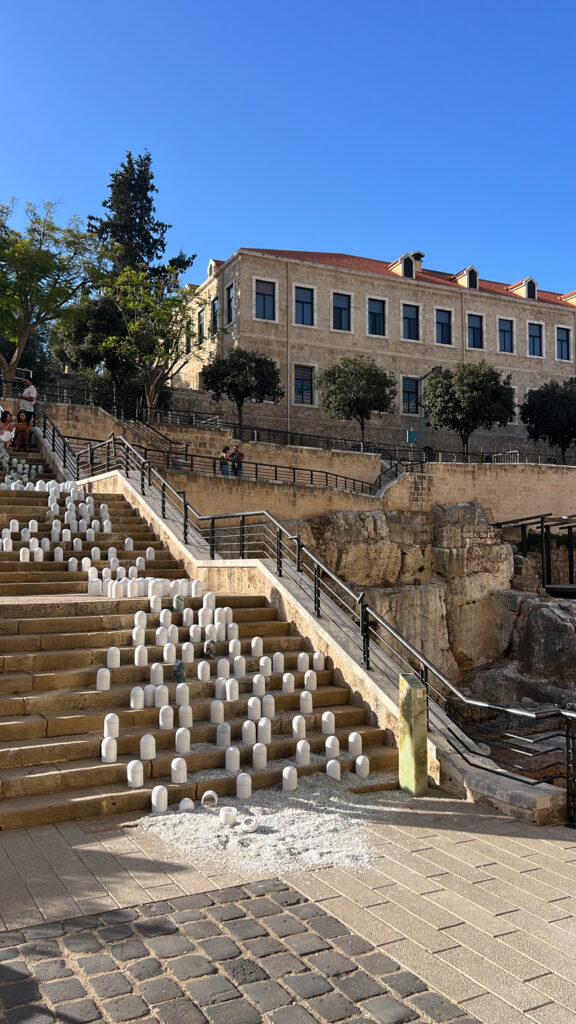
Descending the stone stairway, Omar Chakil’s Memory Upcycle unfolded like a gentle cascade: seven hundred marble boxes filled with sea salt and dried thyme streamed downward, evoking the flow of time. “Rather than fixing memory in place, the installation allows it to move and resurface,” Osseiran explained. The piece bridged nature and ritual, turning remembrance into movement — an echo of Beirut’s own fluid, evolving identity.
Nature as Totem: David/Nicolas × Iwan Maktabi
Within Designer Showcases, where independent exhibitions are held around the city by designers during the 5 days of We Design Beirut, David Raffoul and Nicolas Moussallem presented Feuillage, a collaboration with Iwan Maktabi that translated the delicate rhythm of leaves into woven abstraction. Shadows, textures, and motion converged in a rug that captured nature’s impermanence — a dialogue between traditional craftsmanship and modern design language.
Threads of Memory: Salim Azzam’s The Embroidered Dream
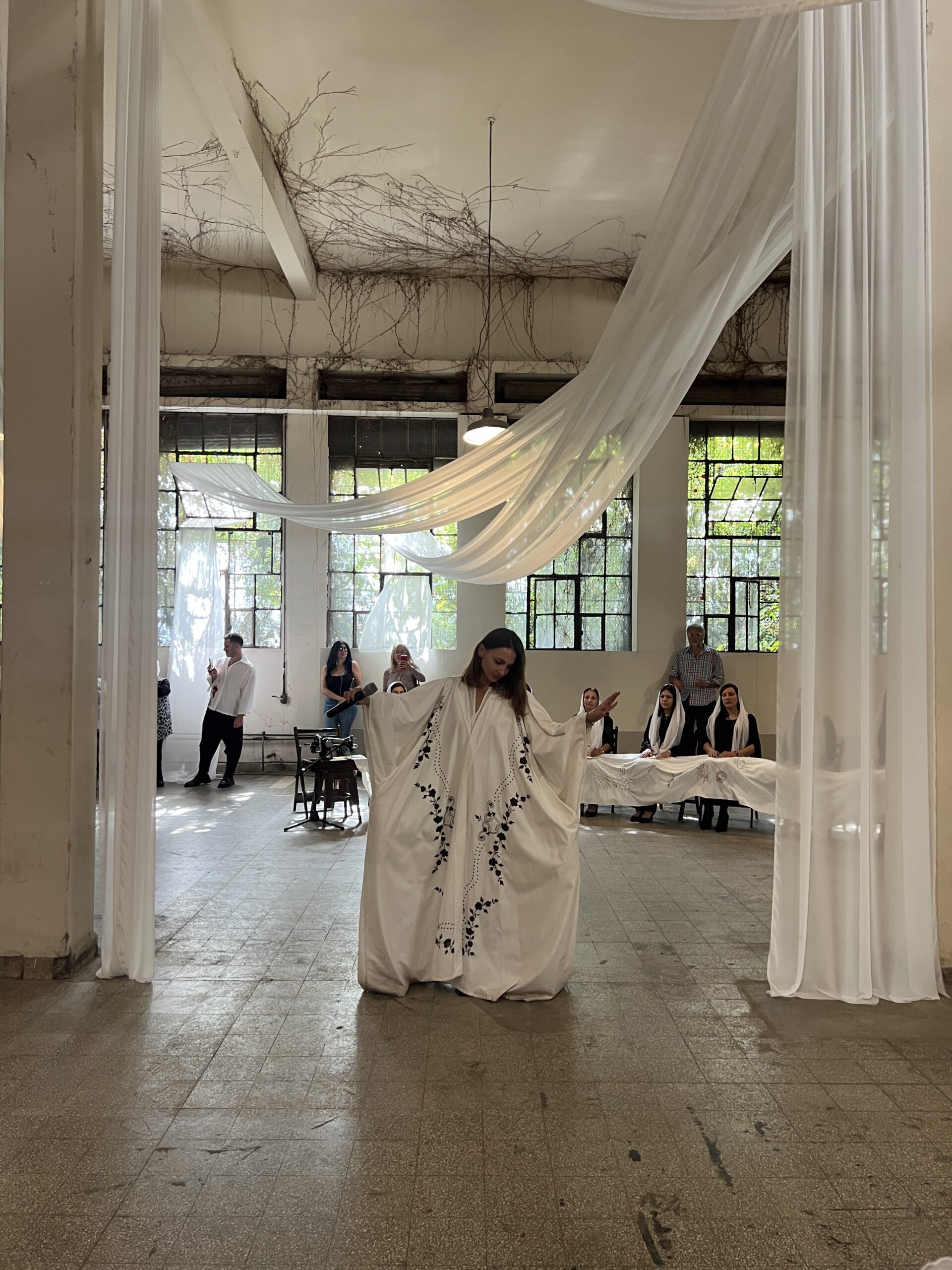
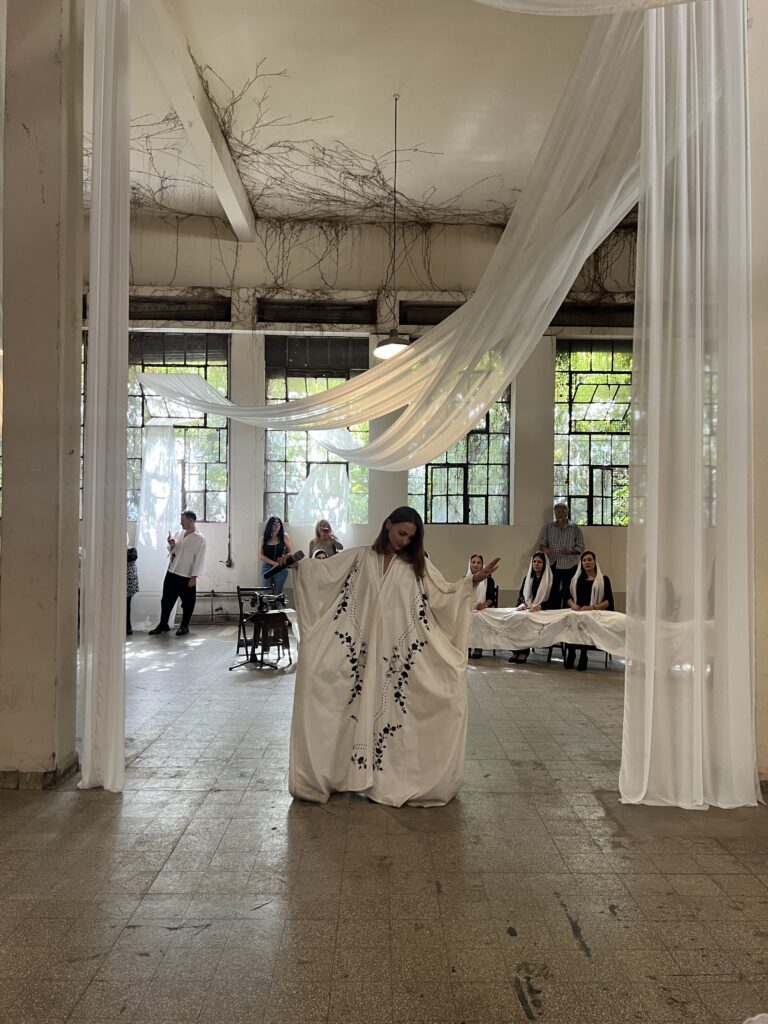
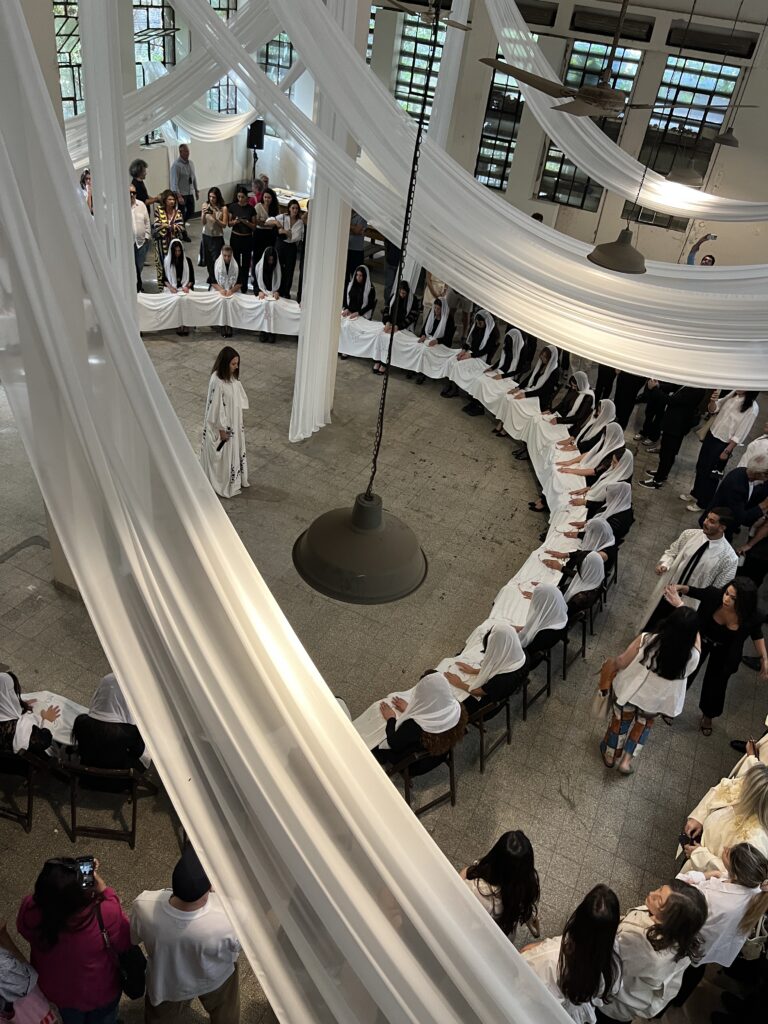
At the Abroyan Factory, the exhibition Threads of Life illuminated Lebanon’s enduring relationship with craft. Designer Salim Azzam transformed the space into a living performance of embroidery — a gesture of care and community that connected the past with the present.
Growing up in a mountain village surrounded by women who embroidered their stories into fabric, Azzam has long positioned his practice as an act of preservation. In The Embroidered Dream, artisans worked collectively beneath cascading silk drapes, their rhythmic needlework accompanied by song. Each thread became both testimony and resistance — a way of keeping memory alive through hands and repetition.
For Azzam, embroidery is language: one that tells of love, resilience, and belonging. “Today’s performance is an act of love,” he told Marie Claire Maison Arabia — a quiet declaration that resonated beyond craft, echoing Beirut’s own need for tenderness amid reconstruction.
Design as Reclamation
As installations began to be dismantled on this final day, one truth lingered: We Design Beirut 2025 was never just a fair. It was a methodology for resilience — proof that design in Lebanon remains inseparable from survival and imagination.
Each venue, each collaboration, each fragment of marble told a version of the same story: that Beirut designs not from erasure, but from endurance. The city continues to rebuild itself through gestures of care and acts of creation — crafting its own future, one piece at a time.
More on We Design Beirut 2025 here.