At a time when international hospitality seems increasingly governed by a universal aesthetic vocabulary, Palazzo Talìa in Rome makes a compelling case for cultural specificity. Its interiors resist the notion that contemporary design requires the reduction of ornament, proposing instead an architecture of colour, pattern, texture and historical references.
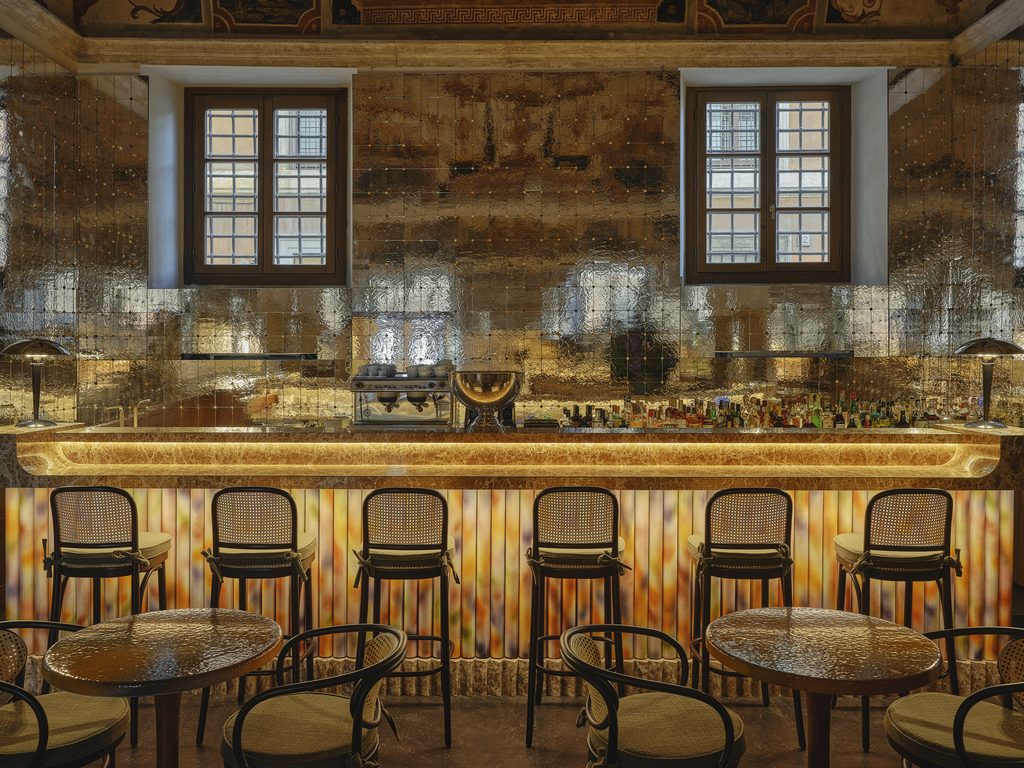
Occupying a sixteenth century palace near Sant’Andrea delle Fratte, once the residence of humanist Angelo Maria Colocci and subsequently home to the Collegio del Nazareno, the hotel is the result of a restoration commissioned by the Federici family in 2021. Three design practices were entrusted with its transformation: studiolucaguadagnino, Mia Home Design Gallery and Laura Feroldi Studio.
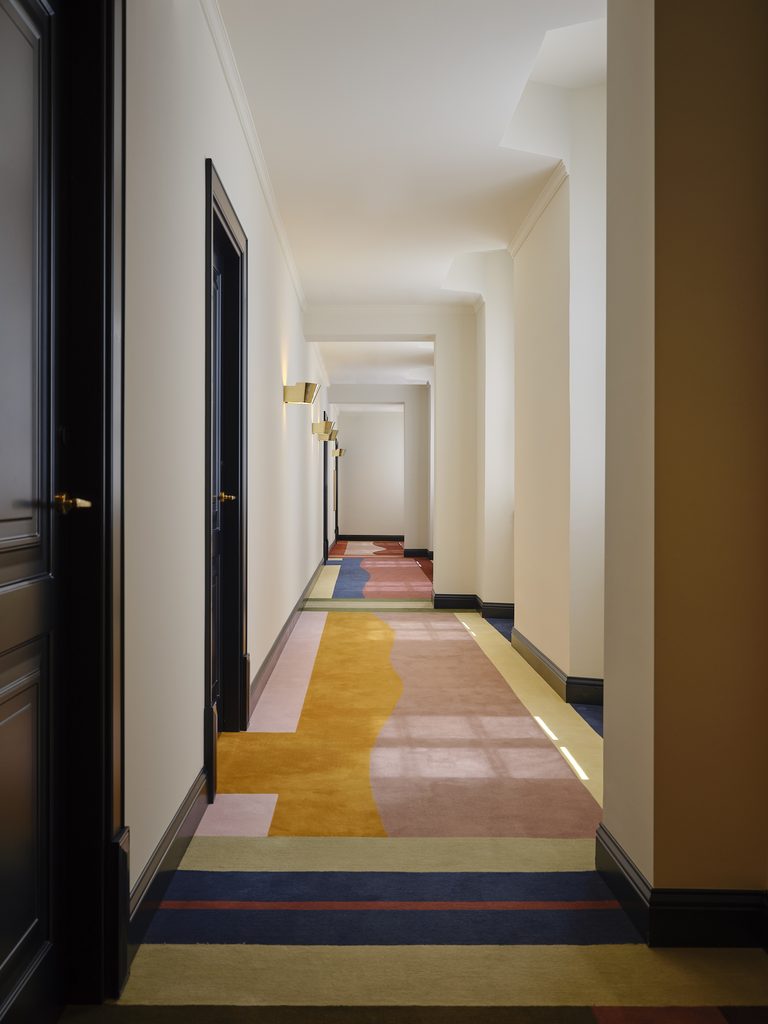
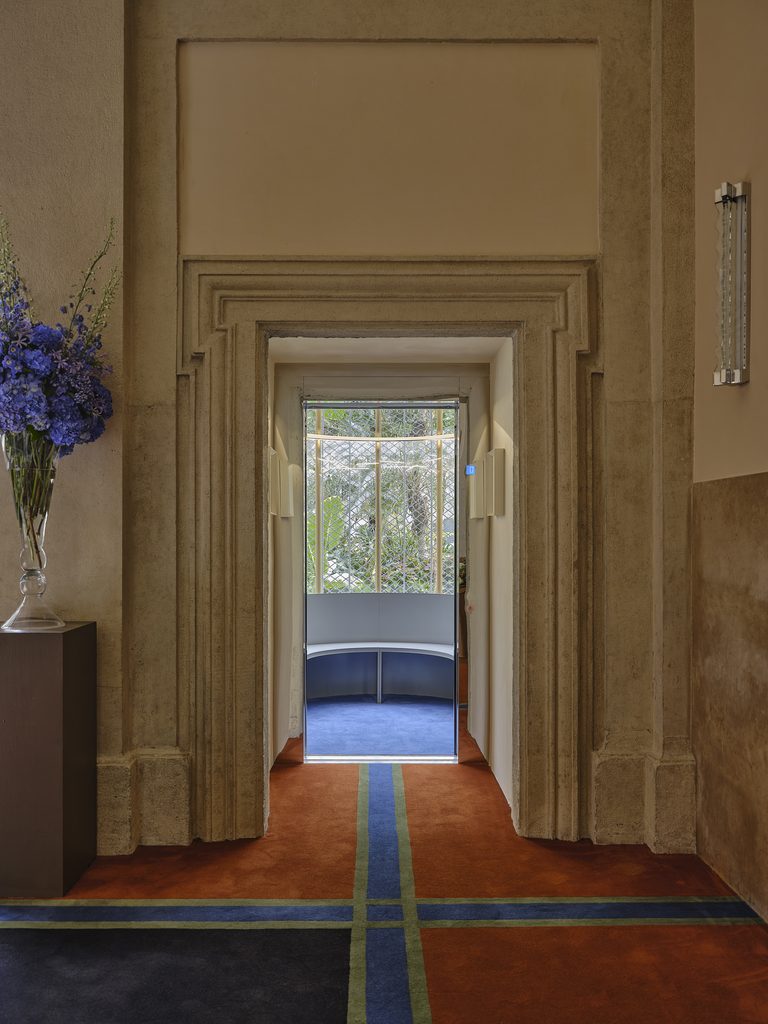
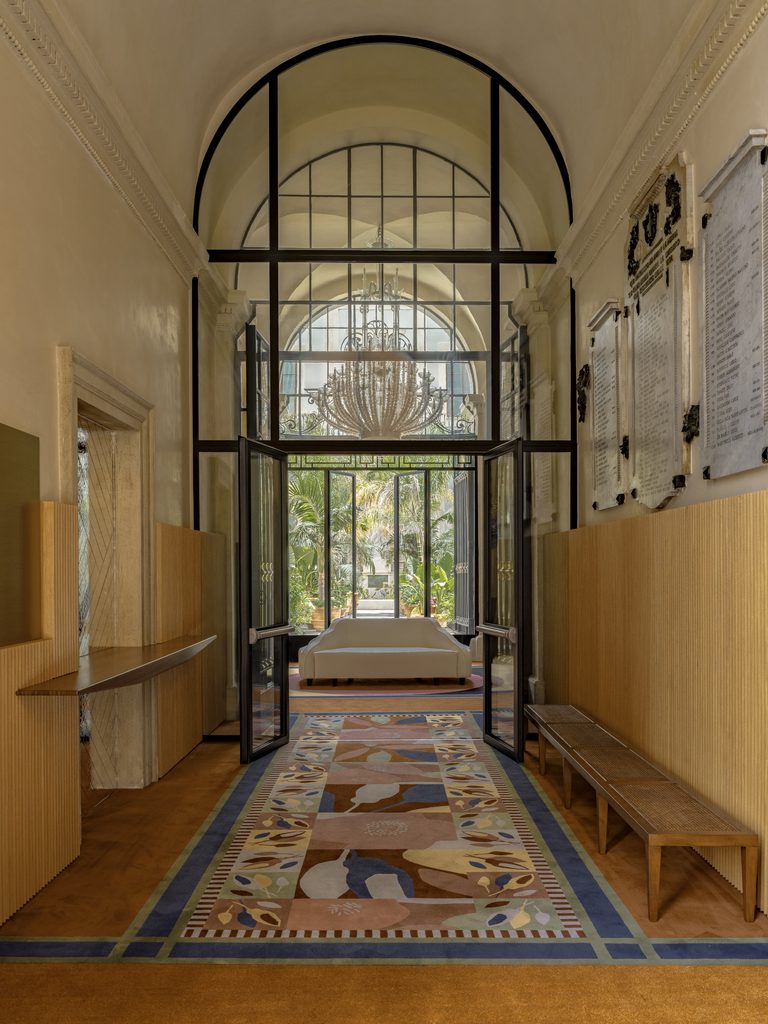
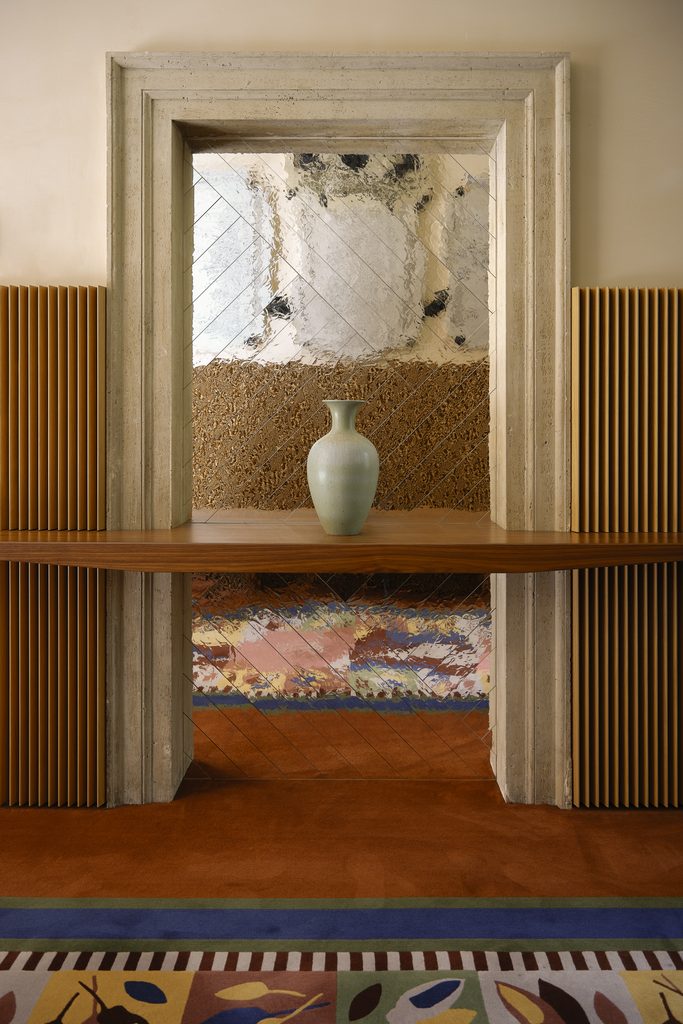
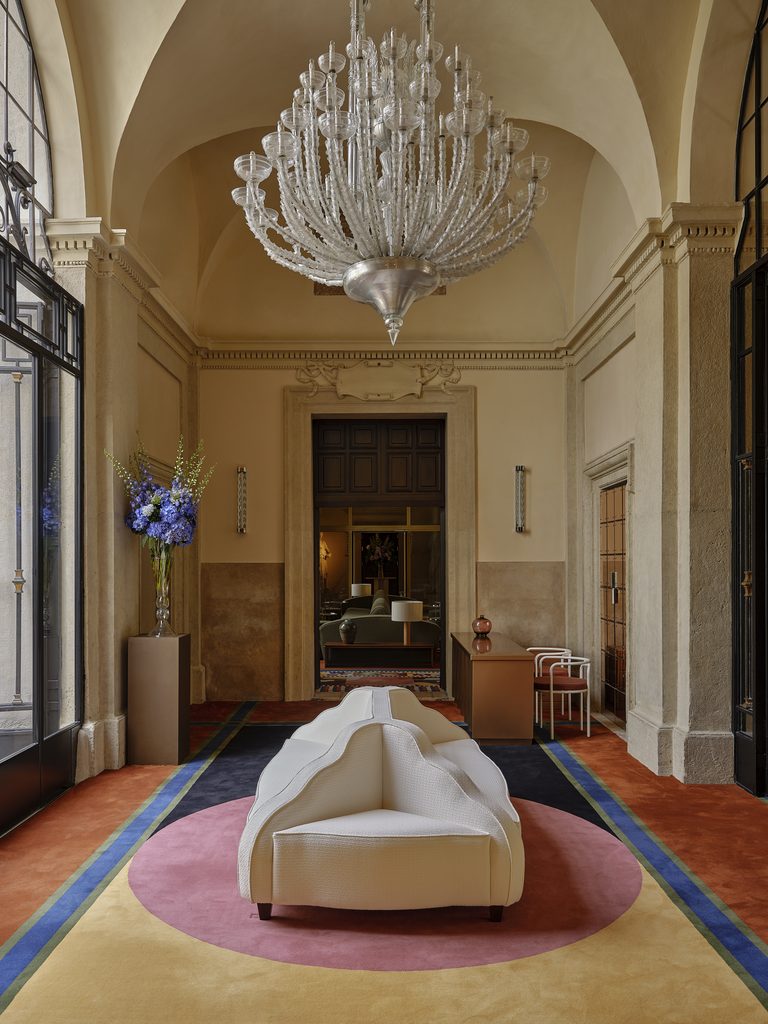
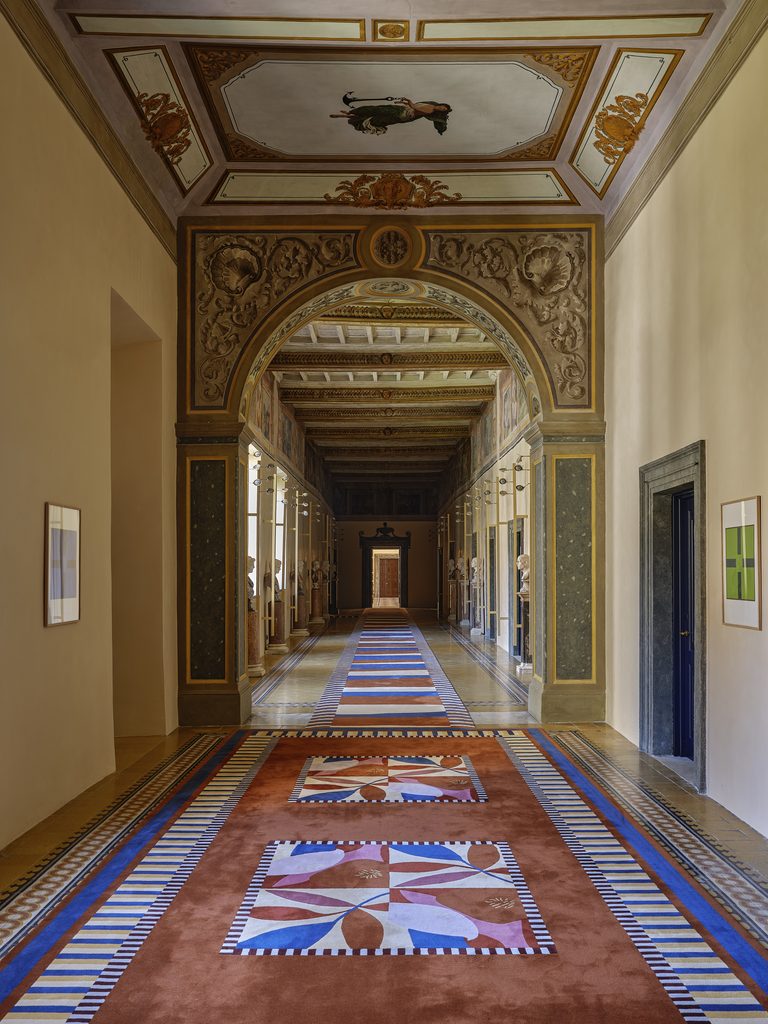
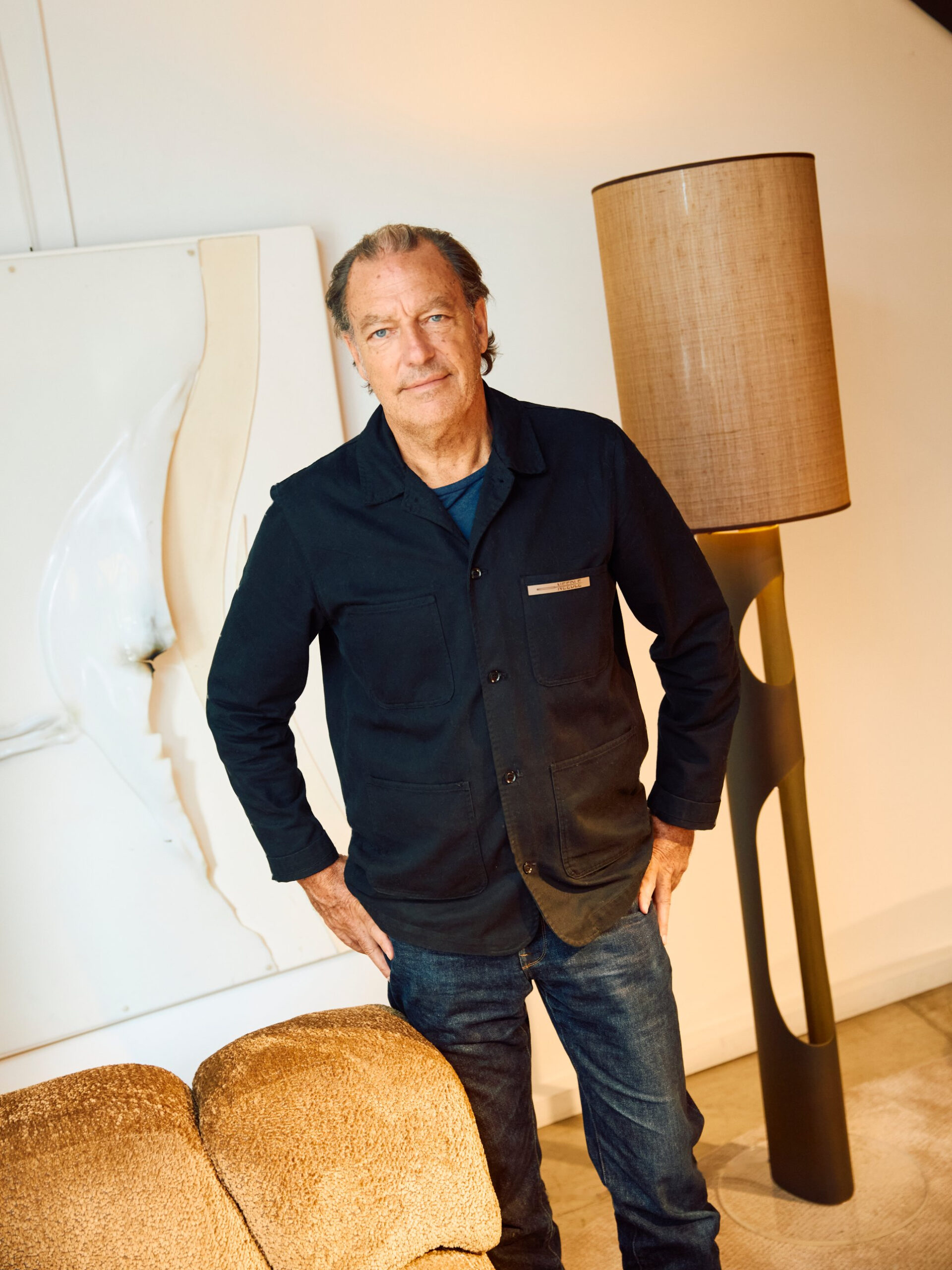
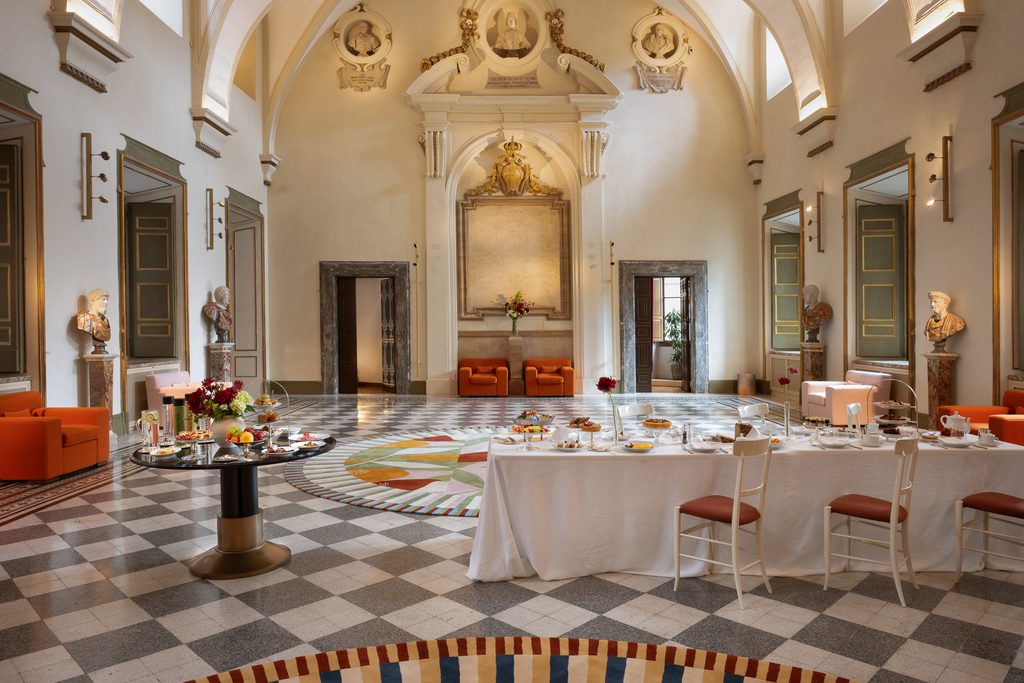
For Luca Guadagnino, whose relationship with interiors extends beyond his work in cinema, the project represents an opportunity to explore decoration on an architectural scale. A monumental carpet conceived by artist Nigel Peake runs through the communal spaces and ascends the staircase towards the piano nobile. Its botanical motifs and saturated shades of pink, red and burgundy establish a visual continuity between rooms of different proportions and historical periods. Rather than an accessory, the carpet becomes an instrument of spatial composition.“Chromaticism guides the entire project, as does our close collaboration with artisans,” explains Pablo Molezum, Project Manager at studiolucaguadagnino.
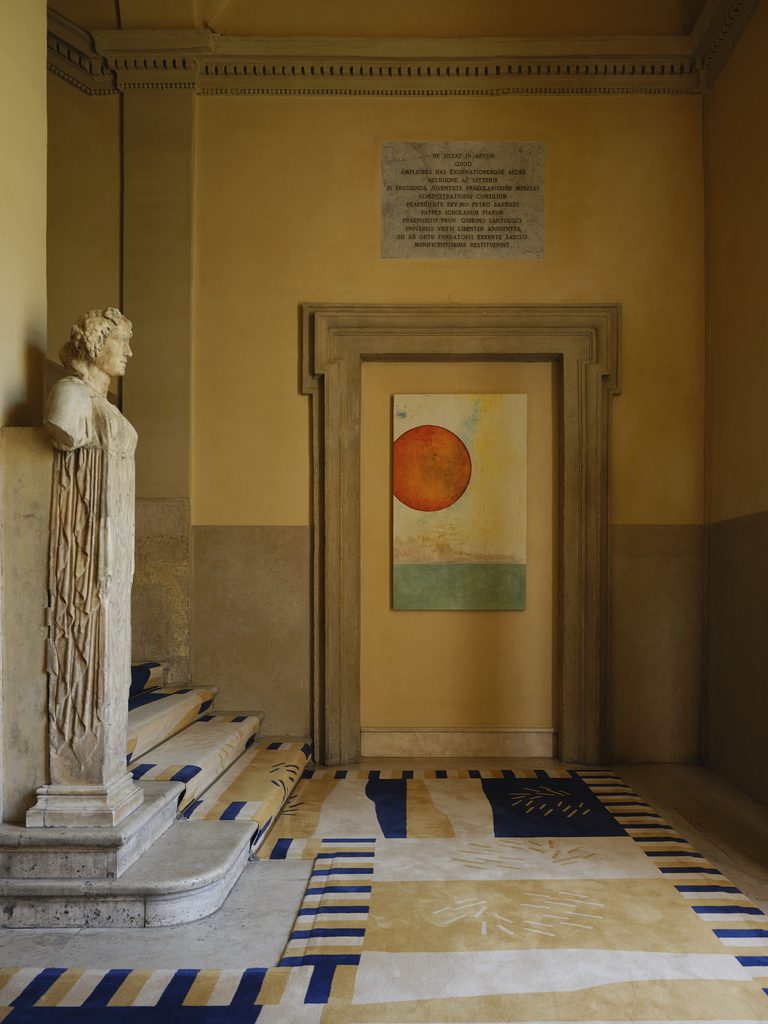
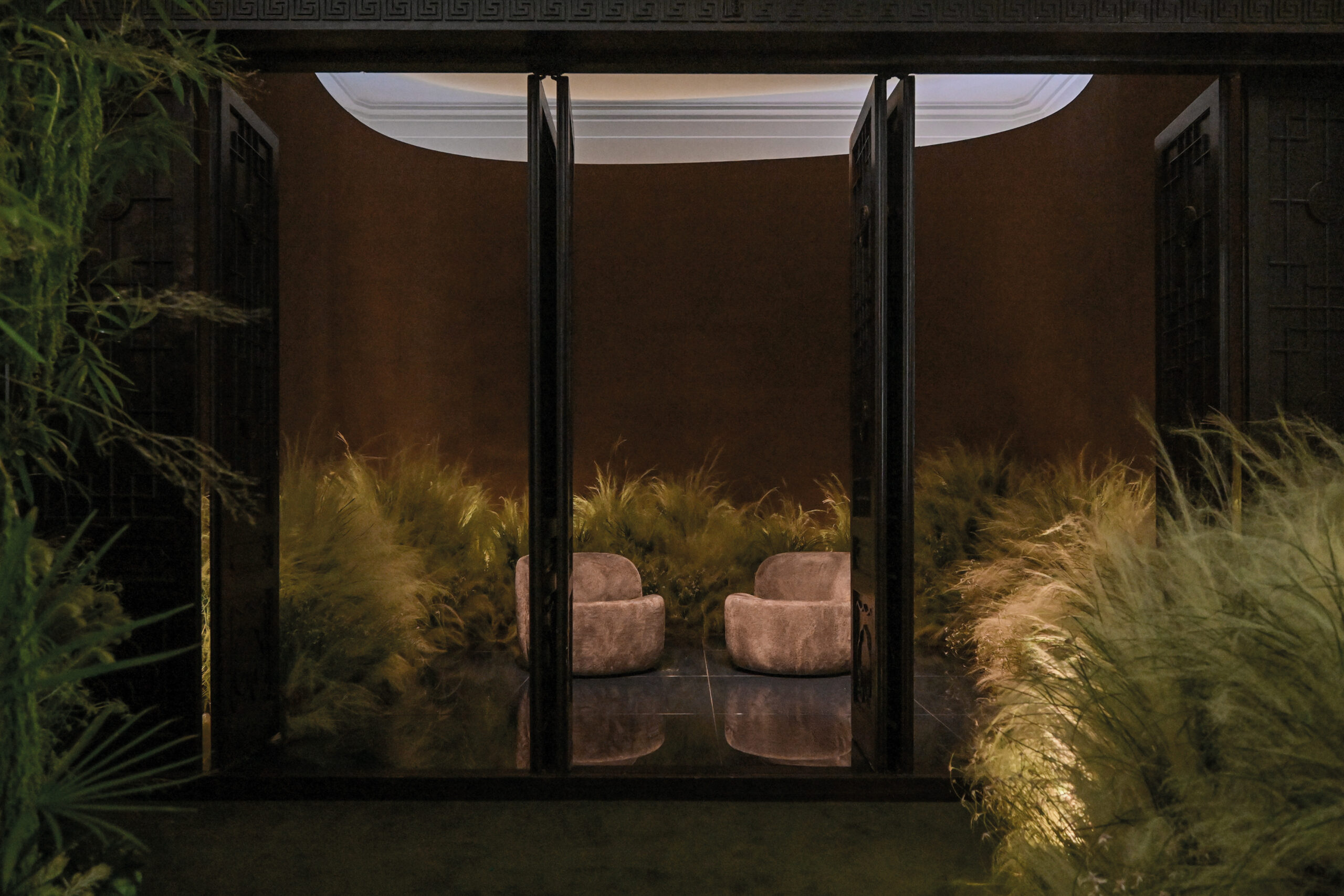
The vocabulary of the public spaces draws on several generations of Italian design. Gae Aulenti’s Locus Solus chairs coexist with bespoke tables in glazed lava stone by Sicilian artisan Rosario Parrinello, while the studio’s Frenesi lamps for FontanaArte introduce another expression of contemporary craftsmanship. In the wellness area, marble surfaces meet green majolica tiles produced by Spanish artisans.
Upstairs, the approach becomes more domestic. Marianna Lubrano Lavadera of Mia Home Design Gallery and Laura Feroldi conceived 25 individual rooms around the Italian notion of sprezzatura, a cultivated form of nonchalance that has its origins in Renaissance courtly culture.
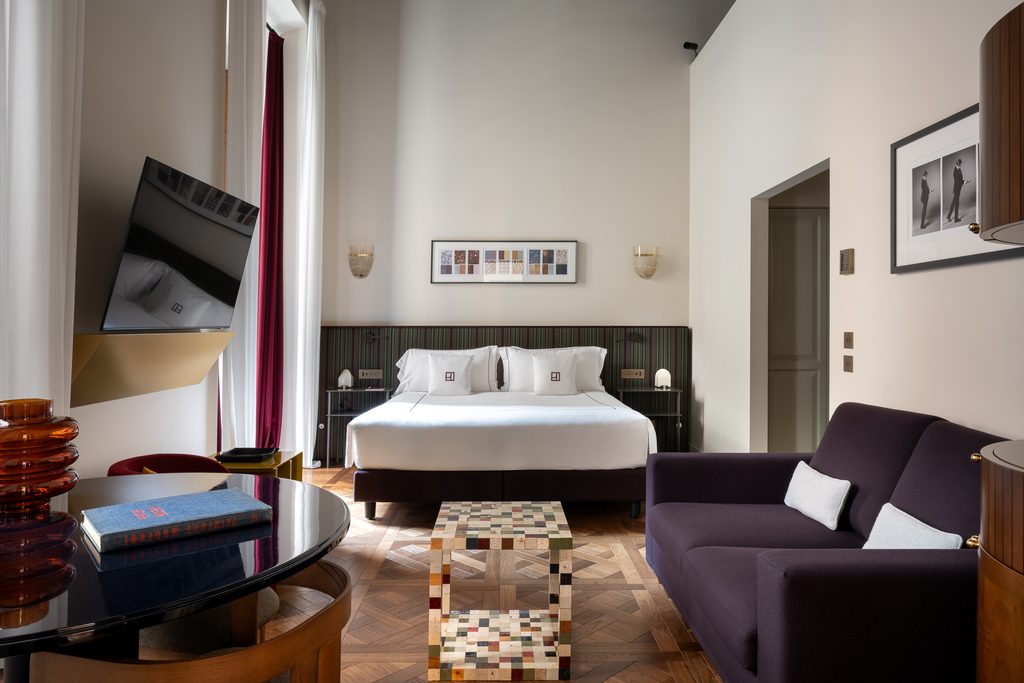
The rooms evoke the accumulated character of a private Roman residence rather than the uniformity of a hotel. Wrought iron canopy beds, Dedar textiles, Venetian glass lighting by Micheluzzi Glass, bespoke furniture and pieces by Piet Hein B form compositions that span periods and design traditions. Photographs by Elisabetta Catalano document the artistic milieu of Rome during the 1960s and 1970s, introducing a more intimate chapter of the city’s cultural history. “Each of our rooms is unique in volume and light, as is typical of historical palaces,” explain the architects.
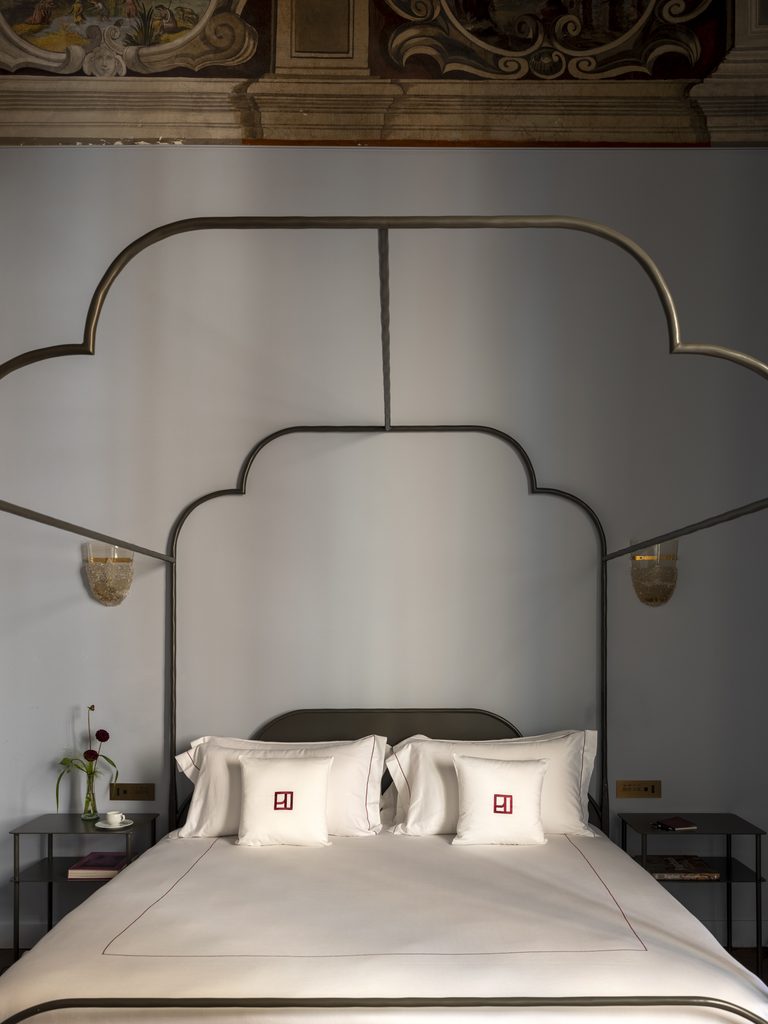
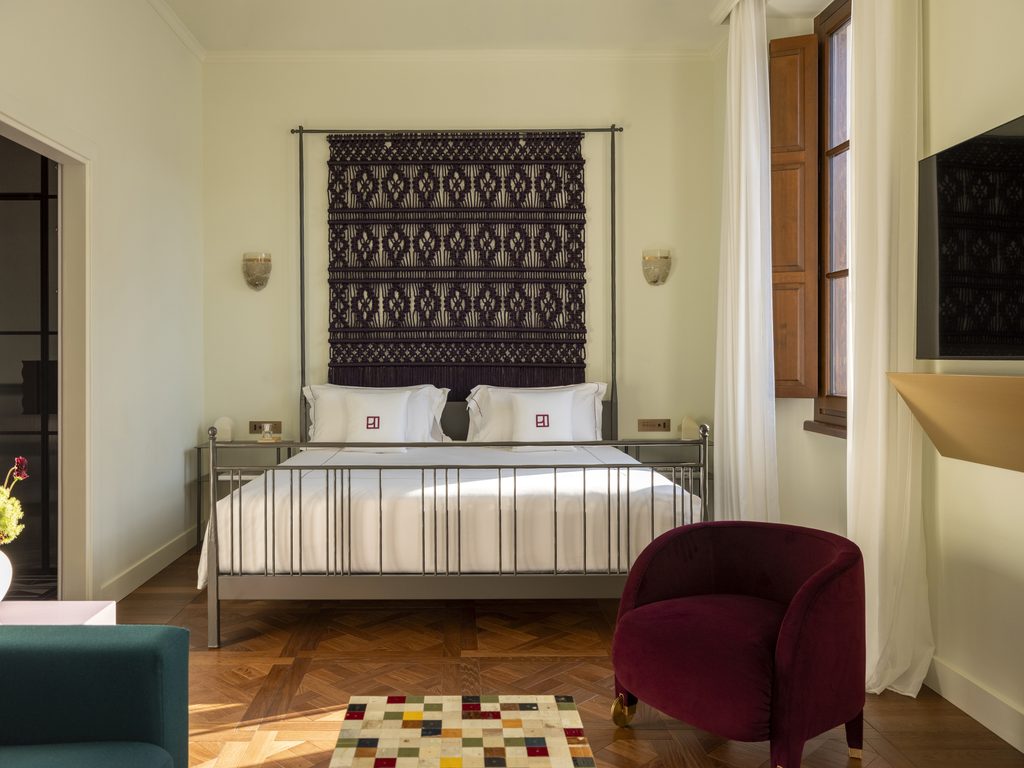
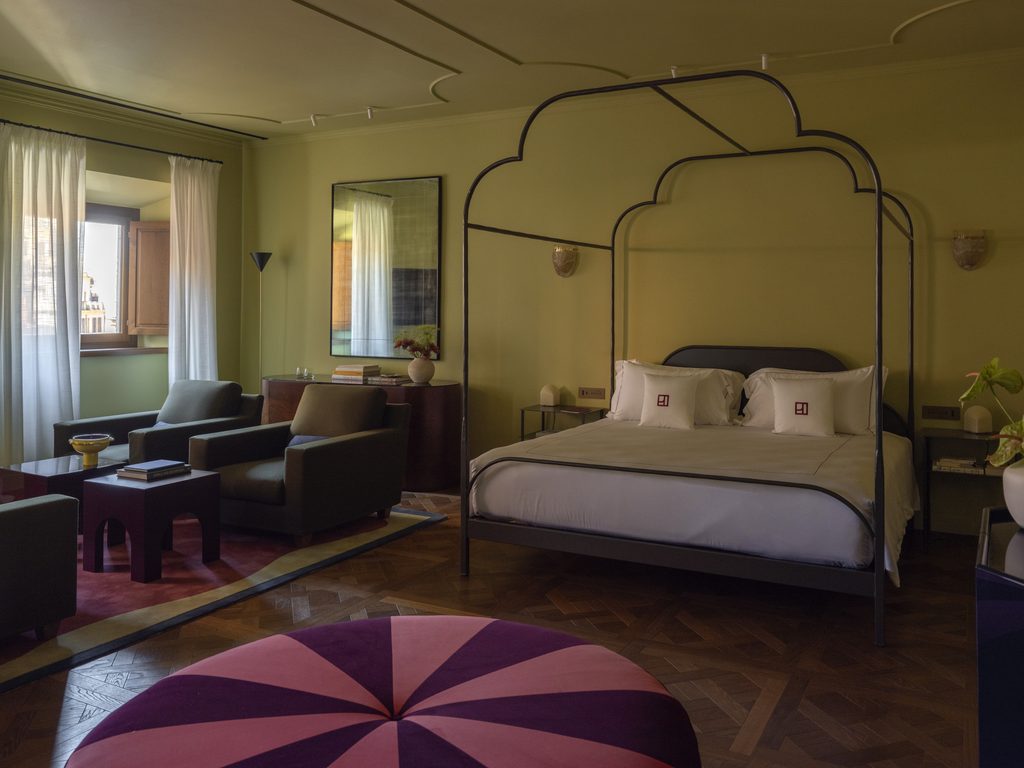
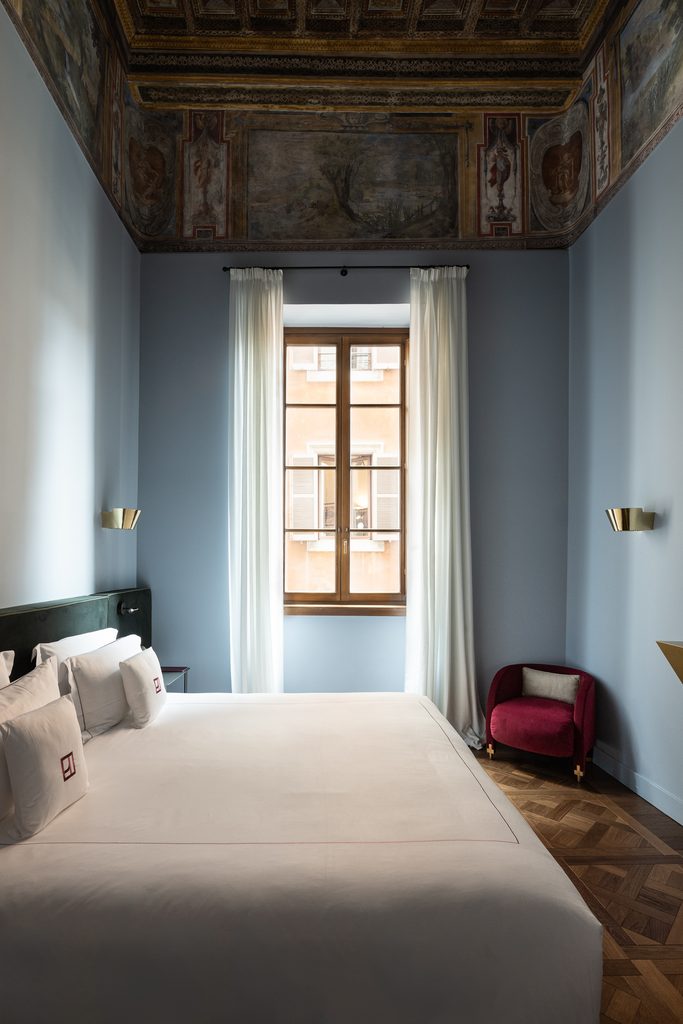
Perhaps the most interesting aspect of Palazzo Talìa is its understanding of decoration as a form of cultural knowledge. The eighteenth century frescoes by Gaspare Serenari, the contemporary works of Roman artist Delfina Scarpa and the commissions entrusted to independent artisans belong to different moments in the history of artistic production, yet each contributes to the identity of the building.
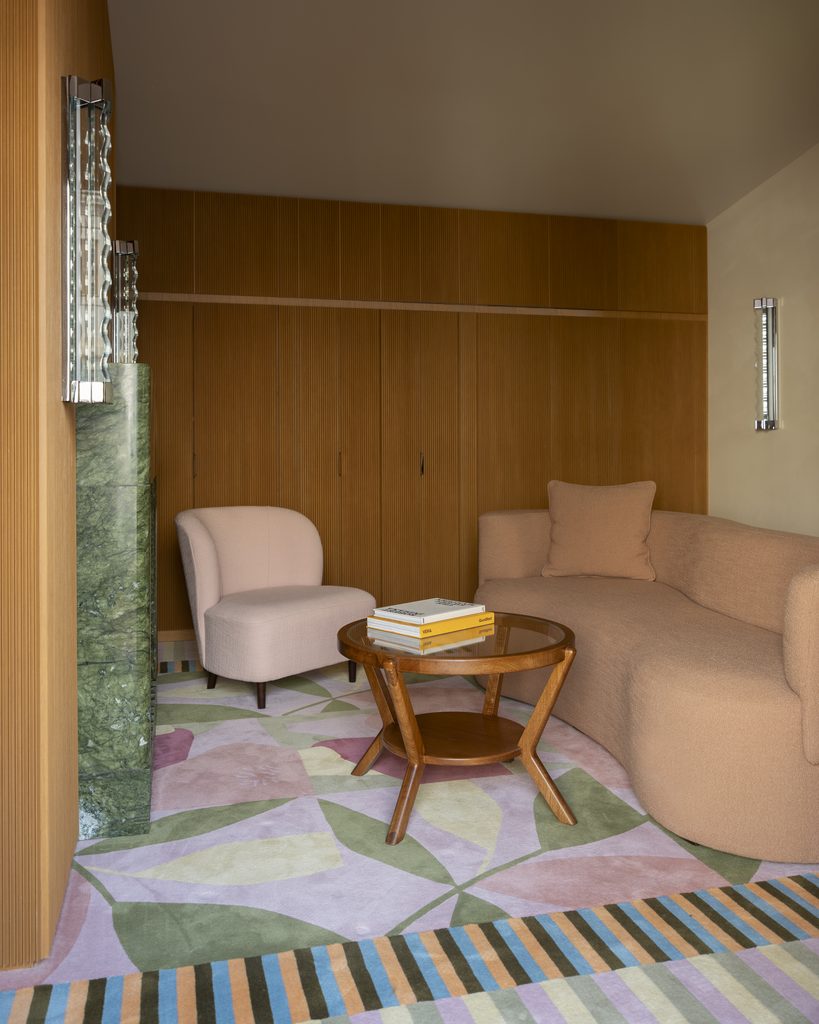
In this sense, Palazzo Talìa offers an alternative definition of contemporary luxury. One measured less by material expense than by the intelligence with which objects, histories and artistic disciplines are brought together.