Few settings offer a more extraordinary backdrop for contemporary art than the Pyramids of Giza. Returning for its sixth edition, Forever Is Now, organised by Art D’Égypte by CulturVator, brings together eight artists whose site-specific installations explore time, memory, perception and the enduring relationship between past and present.
Running from 8 to 28 November 2026, the exhibition also marks ten years of Art D’Égypte, the cultural platform founded by Nadine Abdel Ghaffar. Across the Giza Plateau, monumental sculptures, immersive structures and symbolic forms establish a dialogue with one of the world’s most recognisable architectural landscapes.
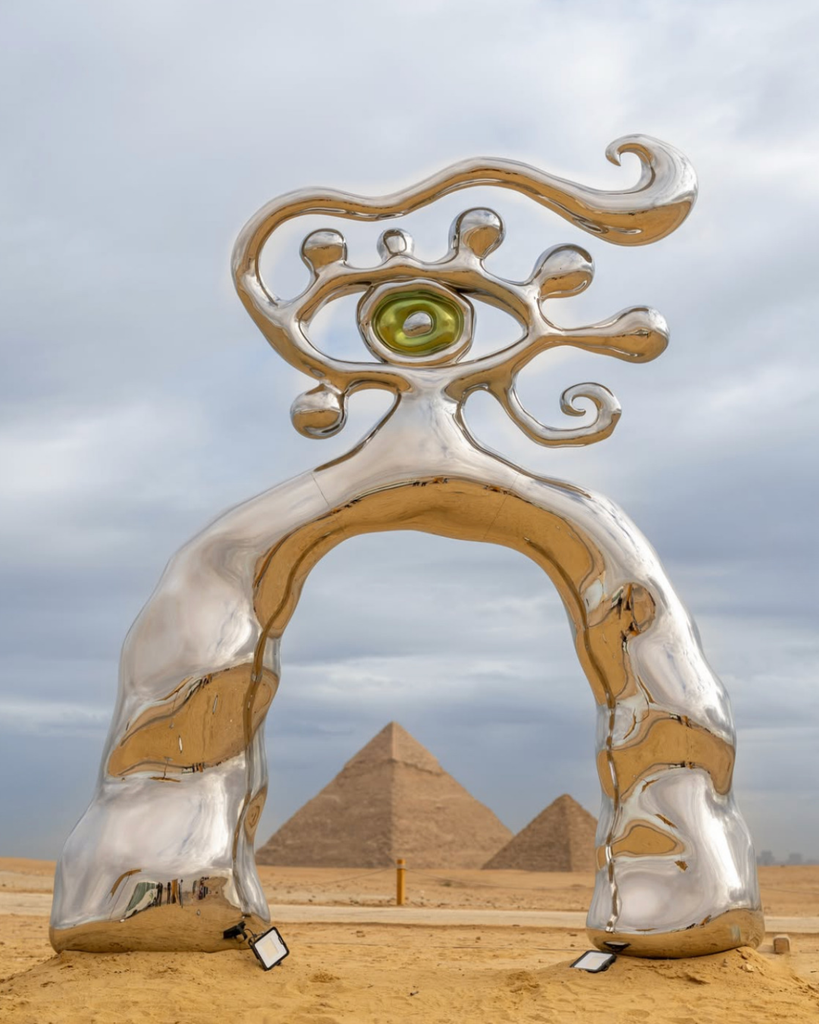
Among the installations, British-French artist Charlotte Colbert’s Possible Landscapes introduces a monumental stainless-steel arch crowned by a single eye. Drawing on mythology and symbolic gateways, the reflective structure explores the boundaries between the visible and the imagined.
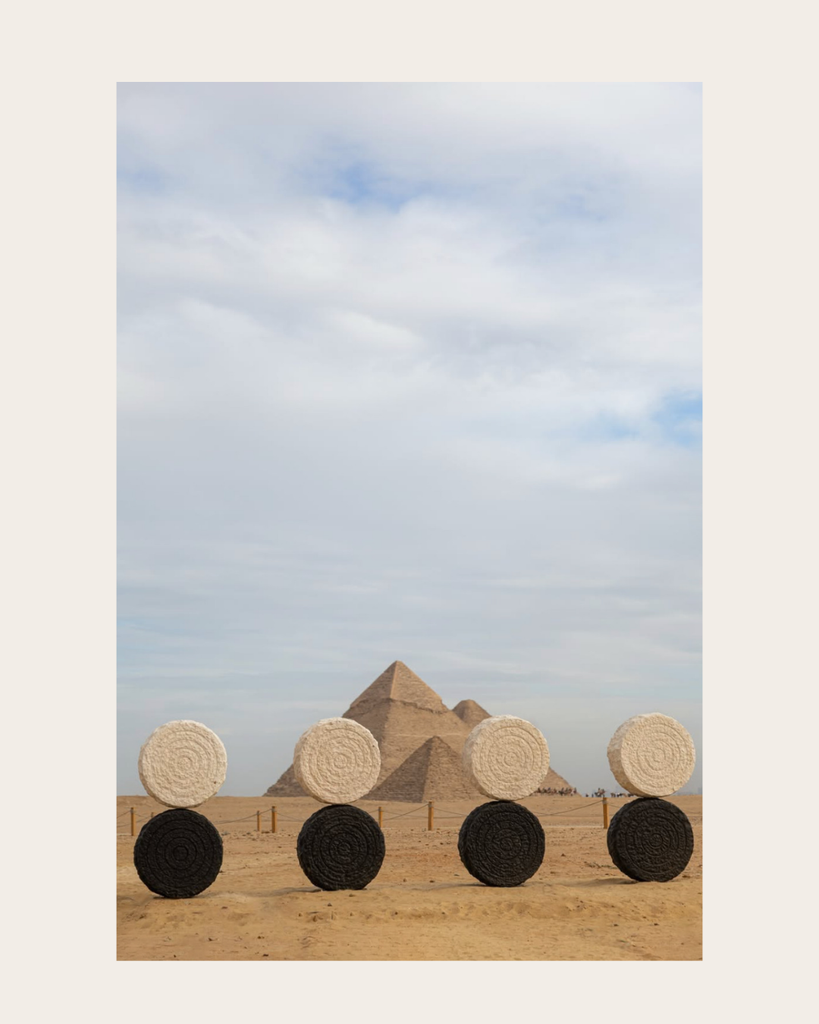
Saudi artist Abdul Rahman Taha takes a different approach with The Gathering, transforming the familiar playing pieces of tawla, or backgammon, into stacked sculptures carved from natural stone. The work reflects on shared rituals, human connection and the traditions passed between generations.
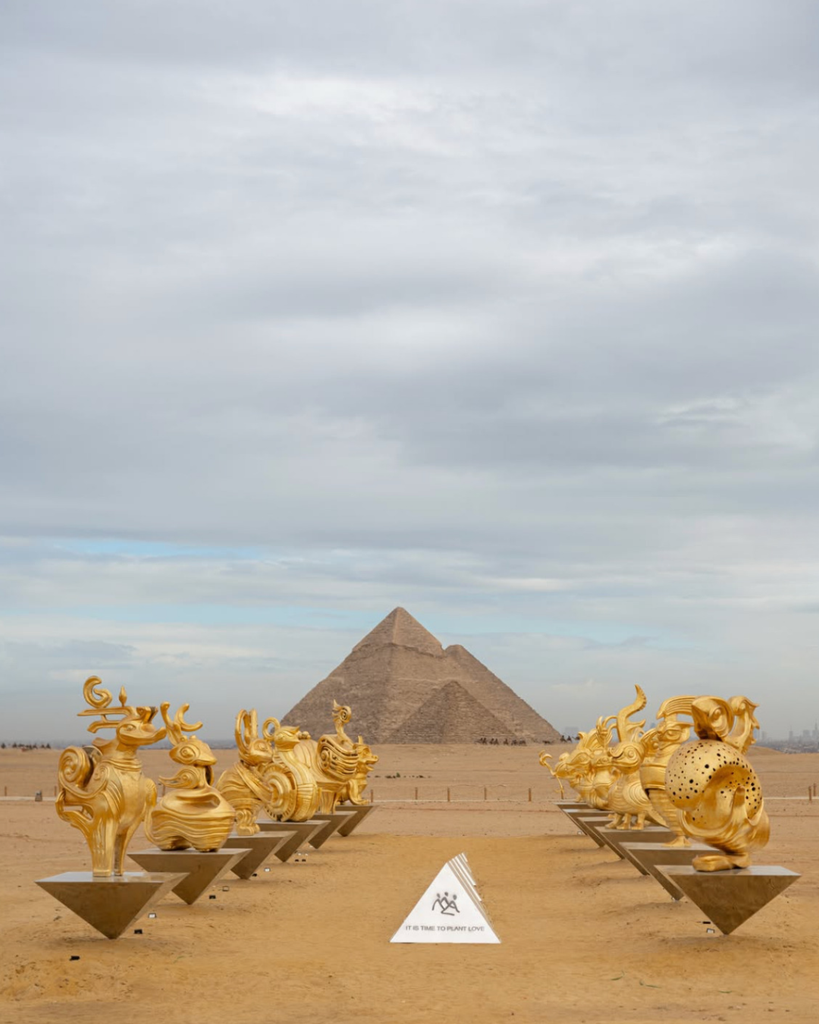
In It Is Time to Plant Love, Chinese artist and designer Jiang Qiong Er presents twelve monumental guardians inspired by the mythologies of ancient civilisations. Celebrating 70 years of diplomatic relations between China and Egypt, the installation explores universal values through a contemporary interpretation of symbolic figures.
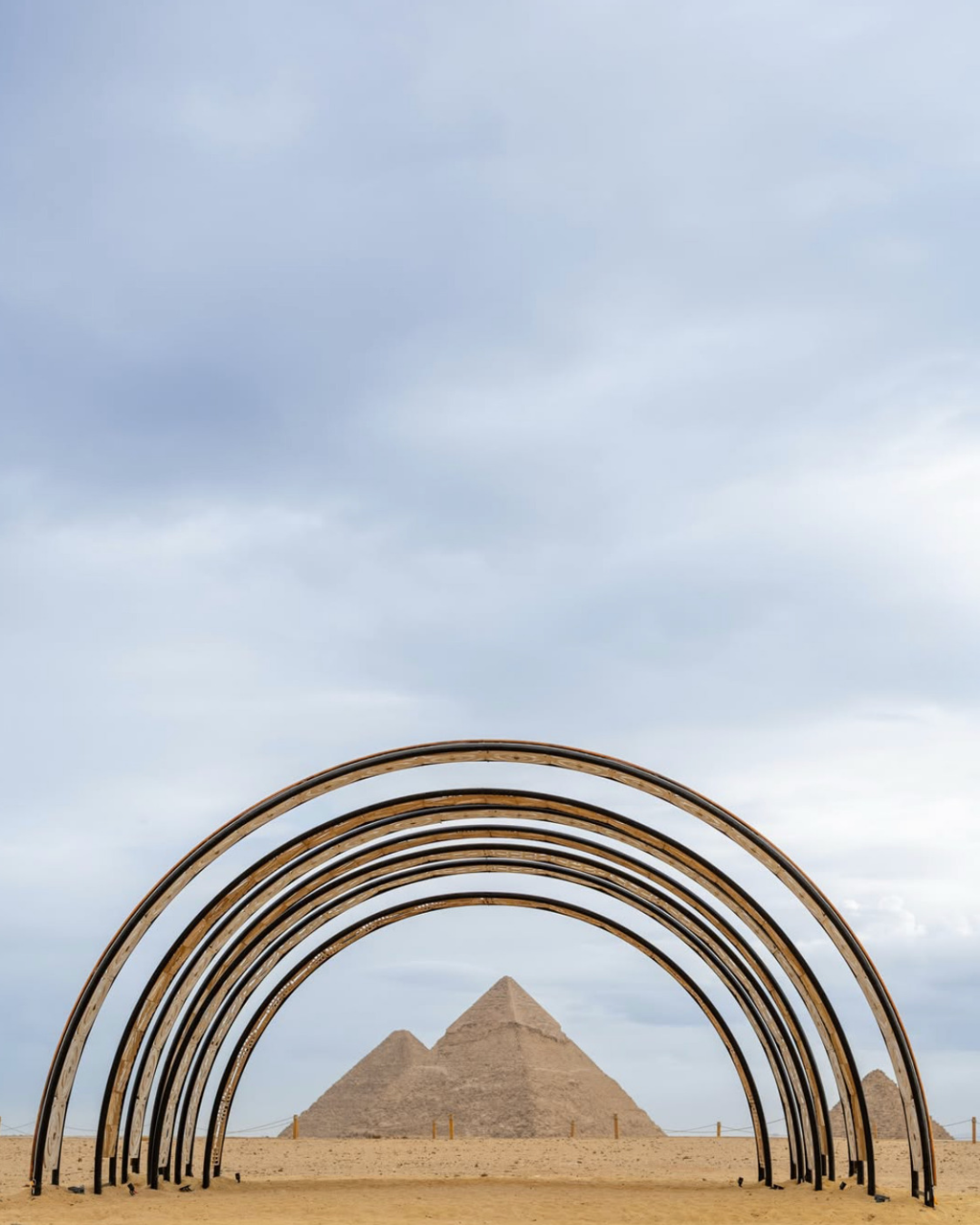
Meanwhile, Raphaele Shirley’s Passage creates an immersive architectural experience through concentric arches made from woven palm reed, copper, steel and light. Inspired by ancient Egyptian concepts of cyclical and enduring time, the installation changes throughout the day as sunlight casts shifting shadows across the desert.
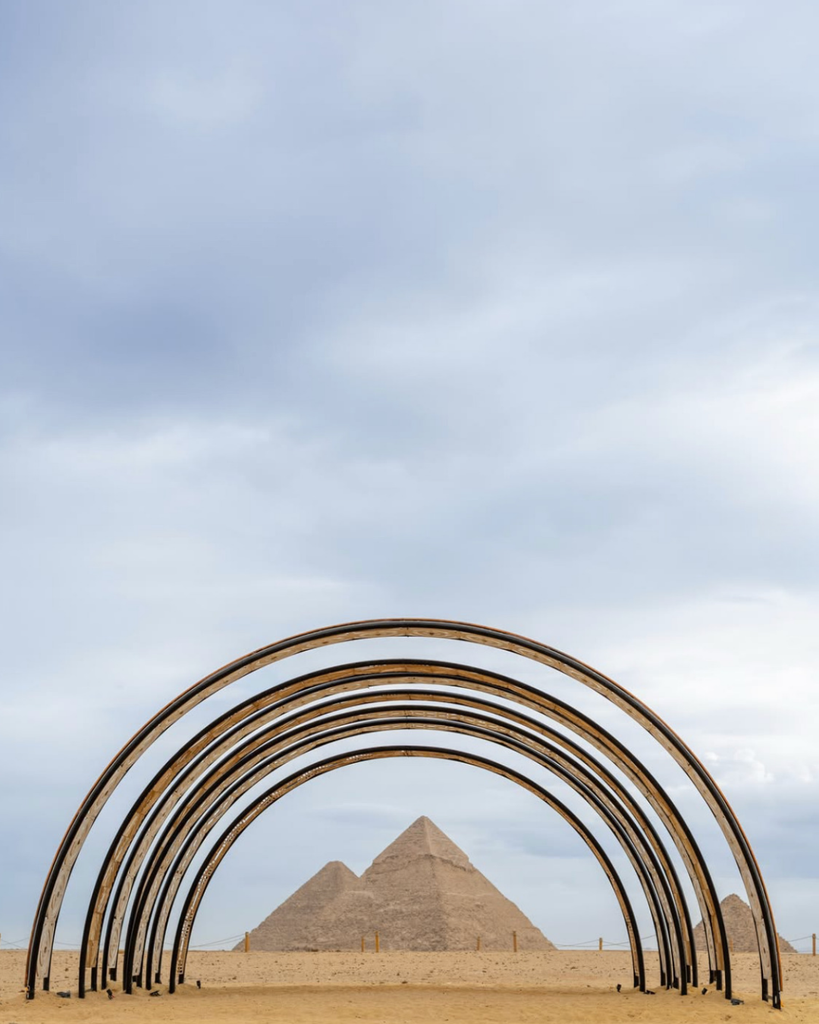
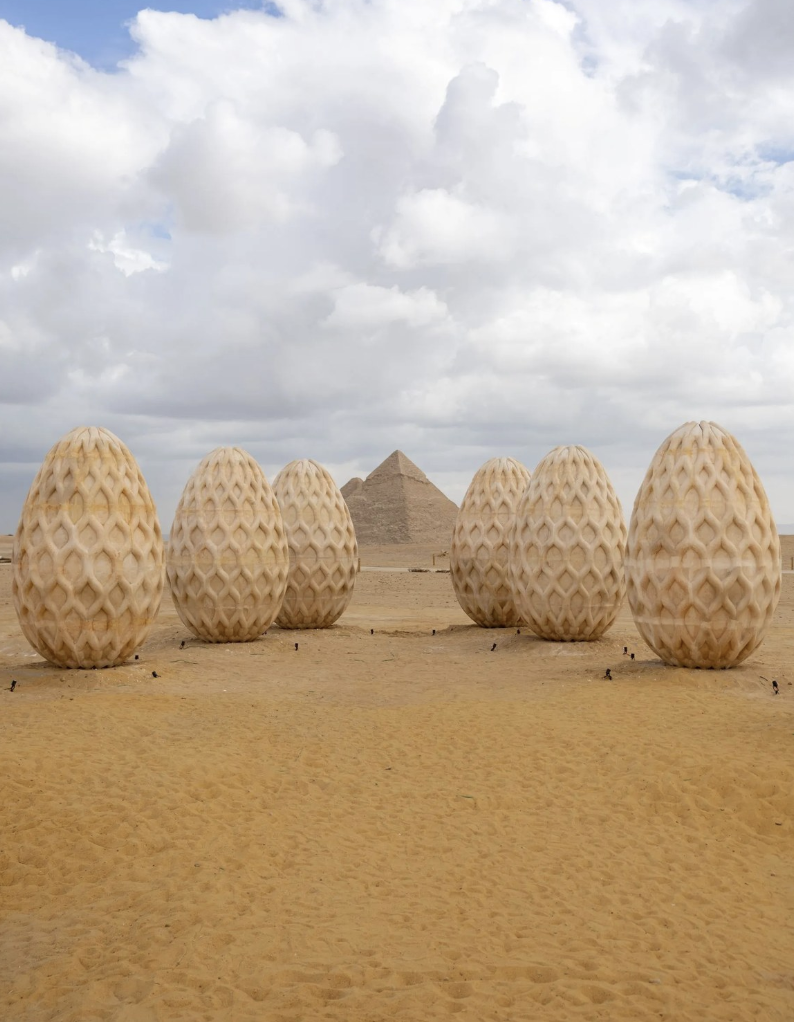
Drawing on ancient Egyptian creation mythology, Rochelle Nembhard’s Celestial Vessels brings together eight organic, egg-shaped sculptures inspired by the Ogdoad, the primordial forces associated with the origins of the universe. Their sculptural forms explore creation, transformation and the relationship between humanity and the cosmos.
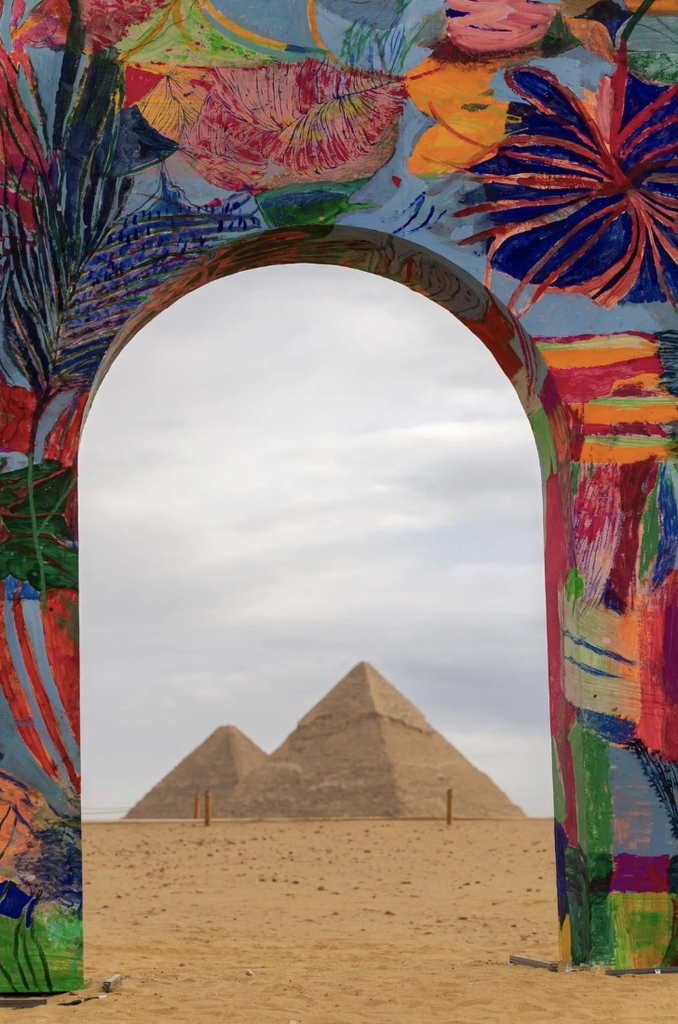
French artist Geoffroy Pithon introduces colour and architectural rhythm with Hortus Pictus, an installation inspired by gardens and ancient Egyptian symbolism. Its vivid surfaces offer a contemporary interpretation of nature, ornament and the relationship between art and its surroundings.
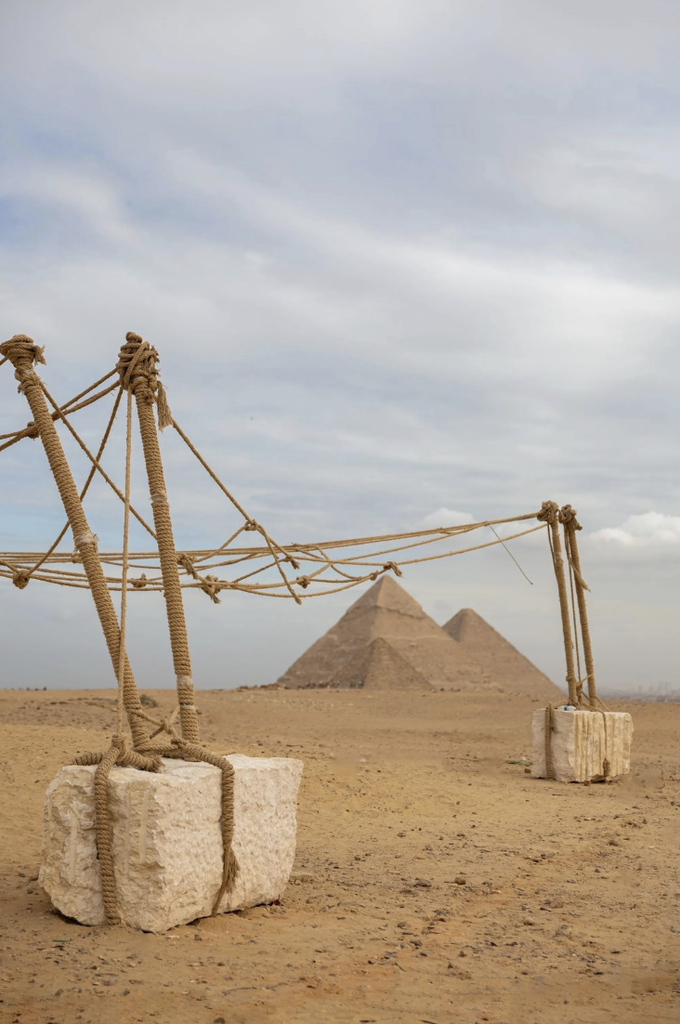
In Talisman of Salvation, Egyptian artist Emad Abu Grain draws inspiration from the ancient Book of the Dead, combining stone blocks and ropes in a sculptural exploration of protection, spiritual passage and the journey towards eternity.
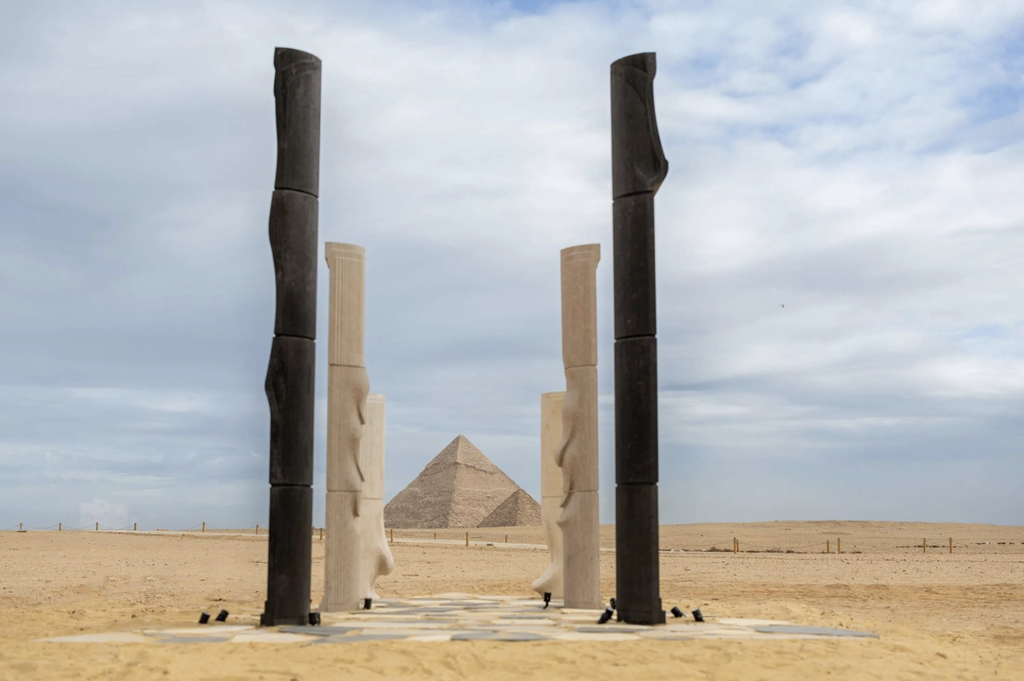
Completing the exhibition, Turkish artist Seçkin Pirim’s The King’s Road uses monumental Egyptian marble columns to create a sculptural passage towards the pyramids. Through repetition, geometry and material, the installation establishes a direct visual relationship with the ancient structures beyond.
Together, the eight installations transform the Giza Plateau into a meeting point between contemporary artistic experimentation and ancient architectural heritage. From natural stone and woven palm reeds to polished steel and marble, the exhibition reveals how materials, forms and symbols can connect civilisations across centuries.
Forever Is Now 06, Pyramids of Giza, Egypt, 8–28 November 2026.